1. Knowledge vs. Readiness
There’s a measurable difference between knowing a procedure and executing it effectively under stress. Performance psychology finds that in high-pressure situations people don’t rise to the occasion — they fall back on the responses most deeply practiced. In other words, training is not tested when everything goes right, but when it goes wrong.
Studies in high-reliability organizations — including military training, aviation, and emergency response — show that repeated exposure to realistic stressors improves reaction time, pattern recognition, and decision confidence more than classroom learning alone. For example, research in simulation training reports that participants exposed to stressful, immersive scenarios are better at transferring skills to real-world situations than those trained with traditional methods.
Readiness is built through experience.
When individuals repeatedly encounter realistic cues — instability, vibration, resistance, force — those cues become familiar and less likely to cause hesitation. And hesitation is where risk grows.
2. The Missing Layer: Physical Feedback
In many operational environments, the body detects problems before the eyes do. A shift in balance. An unexpected vibration. A subtle change in traction or resistance. These physical cues often precede visible warnings.
Yet many training environments remove that sensory layer. Simulations may look accurate, but they feel static. Visual realism replaces physical realism.
That gap affects transfer.
Research in neuroscience and simulation-based learning shows that multi-sensory engagement strengthens motor learning and accelerates skill transfer. When training activates visual, auditory, and somatosensory systems together, the brain builds stronger predictive models and improves response timing. Studies on embodied cognition and motor learning demonstrate that physical interaction enhances retention and real-world application compared to passive observation alone.
3. Where Motion Changes the Equation
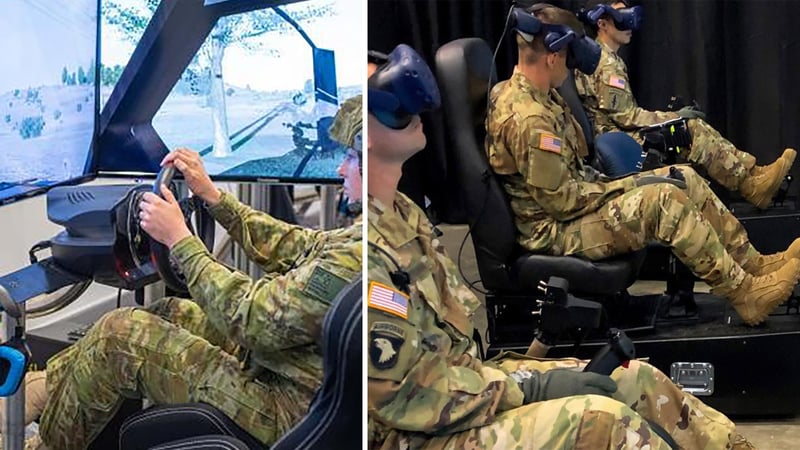
This is where motion-based training technologies — such as D-BOX haptic motion systems — move simulation from visual representation to physical replication.
D-BOX reproduces precise movements, vibrations, and surface textures synchronized in real time with simulation data. Instead of simply observing instability on a screen, trainees physically experience balance shifts, traction changes, resistance, and impact forces as they occur.
The objective is not intensity for its own sake, but perceptual calibration — aligning sensory input with operational reality.
By recreating subtle balance transfers, surface variations, progressive loss of control, and sudden force inputs, motion adds back the sensory layer that traditional simulations often remove. Research in multisensory and motor learning consistently shows that coupling visual information with physical feedback improves skill transfer and reaction timing because the brain builds stronger sensorimotor associations.
In practical terms, trainees develop perceptual awareness before entering live operations. The nervous system becomes familiar with instability cues. Pattern recognition accelerates. Decision-making becomes more fluid under pressure.
And importantly, this calibration happens in a controlled environment — without exposing teams to real-world risk.
In performance-critical industries, that layer of physical realism isn’t cosmetic. It directly supports operational readiness.
4. Rethinking Preparedness
Compliance remains foundational. Clear procedures, certification programs, and standardized protocols are essential components of any safety strategy. They establish expectations and create consistency across teams and operations.
However, preparedness is measured differently. It is reflected in how quickly an individual reacts when conditions shift, how confidently they navigate uncertainty, and how effectively they maintain composure under pressure.
As operational environments grow more complex and less predictable, leading organizations are moving beyond information-based training toward experience-based learning models. The distinction is important: information communicates what should happen, while experience conditions how a person actually responds when events unfold in real time.
Integrating realistic motion and physical feedback into simulation environments supports this shift. It ensures that training engages not only cognitive understanding but also sensory and motor systems that govern real-world action. This is not about adding intensity for its own sake, but about improving performance transfer — aligning simulated conditions more closely with operational reality so that practiced responses activate reliably outside the training environment.
When risk is physically experienced within a controlled and safe context, learning becomes embedded at a deeper level. Responses are not simply recalled; they are executed with greater fluency, timing, and stability when it matters most.
In high-consequence environments, realism is not an enhancement to training. It is a prerequisite for reliable performance.